
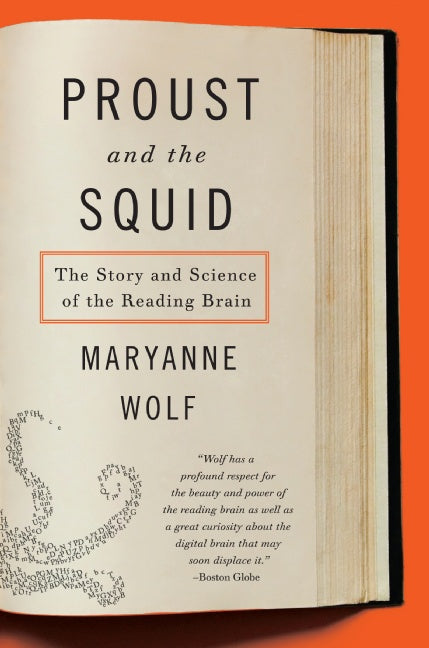
Description
“Wolf restores our awe of the human brain—its adaptability, its creativity, and its ability to connect with other minds through a procession of silly squiggles.” — San Francisco Chronicle
How do people learn to read and write—and how has the development of these skills transformed the brain and the world itself ? Neuropsychologist and child development expert Maryann Wolf answers these questions in this ambitious and provocative book that chronicles the remarkable journey of written language not only throughout our evolution but also over the course of a single child’s life, showing why a growing percentage have difficulty mastering these abilities.
With fascinating down-to-earth examples and lively personal anecdotes, Wolf asserts that the brain that examined the tiny clay tablets of the Sumerians is a very different brain from the one that is immersed in today’s technology-driven literacy, in which visual images on the screen are paving the way for a reduced need for written language—with potentially profound consequences for our future.
In the tradition of Stephen Pinker’s The Language Instinct, Tufts University cognitive neuroscientist and child development expert Maryanne Wolf-known for her work in dyslexia-offers an eloquent book about how the brain learned to read and, in the process, changed the way we as humans think.
Making the argument that “Human beings were never born to read,” Proust and the Squid explains how the brain that examined tiny clay tablets of the Sumerians was a very different brain from the one that is immersed in today’s technology-driven literacy. Not only does Wolf explore the brain throughout the course of time, but she also explores the course of a single child’s life, showing in the process why children with dyslexia have reading difficulties and singular gifts. Using neurology, sociology, psychology and philosophy, Wolf grounds her assertion in historical and scientific fact yet manages to anchor complicated ideas with down-to-earth examples and lively personal anecdotes. Proust and the Squid challenges the way we see the world, or at least the printed page, with an impactful blend of science and culture that is erudite, fascinating, and memorable.You may also like
Top Trending
