


描述
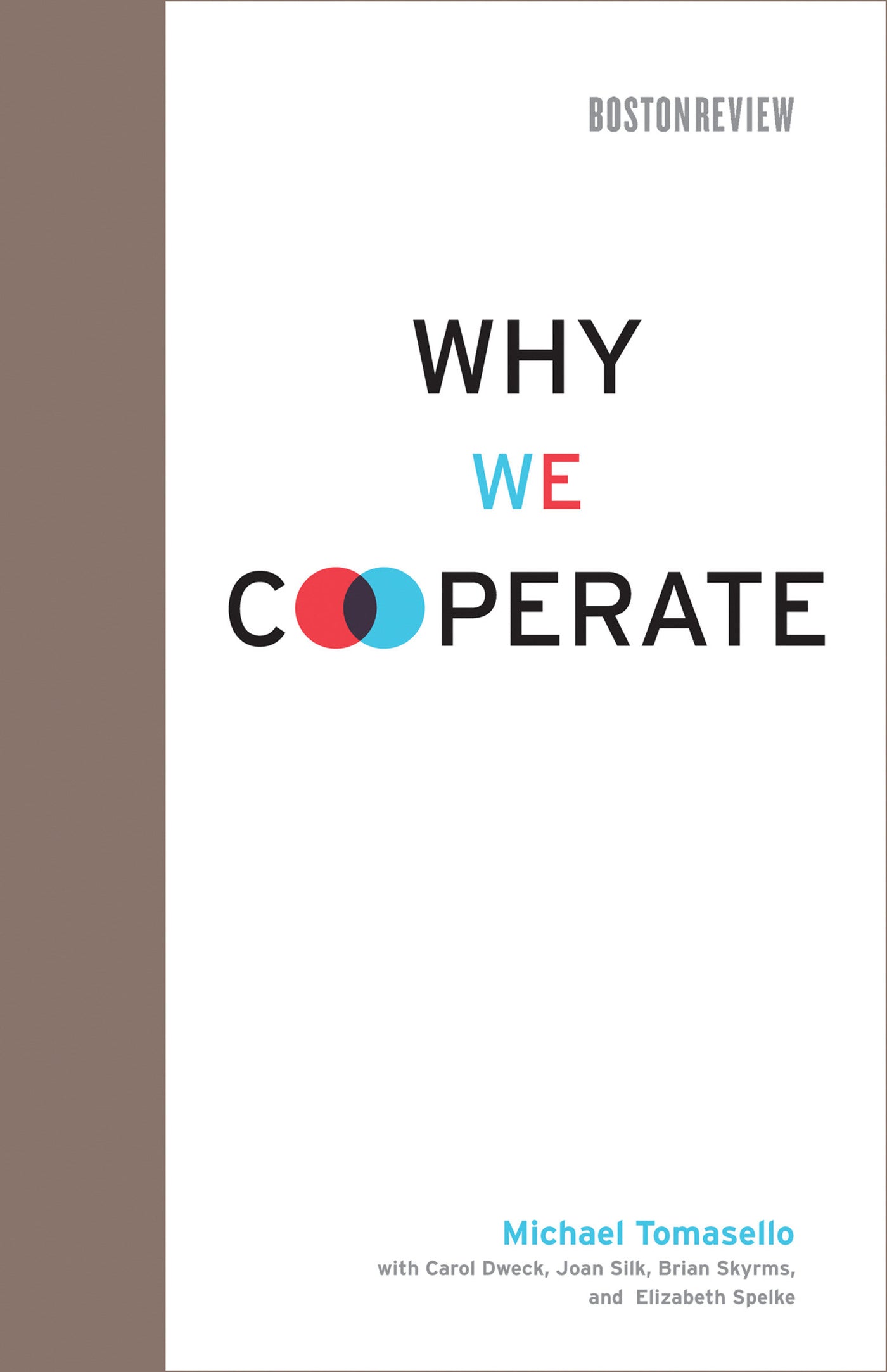
By: Michael Tomasello | Series: Boston Review Books
Understanding cooperation as a distinctly human combination of innate and learned behavior.
Drop something in front of a two-year-old, and she’s likely to pick it up for you. This is not a learned behavior, psychologist Michael Tomasello argues. Through observations of young children in experiments he himself has designed, Tomasello shows that children are naturally—and uniquely—cooperative. Put through similar experiments, for example, apes demonstrate the ability to work together and share, but choose not to. As children grow, their almost reflexive desire to help—without expectation of reward—becomes shaped by culture. They become more aware of being a member of a group. Groups convey mutual expectations, and thus may either encourage or discourage altruism and collaboration. Either way, cooperation emerges as a distinctly human combination of innate and learned behavior.
In Why We Cooperate, Tomasello’s studies of young children and great apes help identify the underlying psychological processes that very likely supported humans’ earliest forms of complex collaboration and, ultimately, our unique forms of cultural organization, from the evolution of tolerance and trust to the creation of such group-level structures as cultural norms and institutions.
Scholars Carol S. Dweck, Joan B. Silk, Brian Skyrms, and Elizabeth S. Spelke respond to Tomasello’s findings and explore the implications.
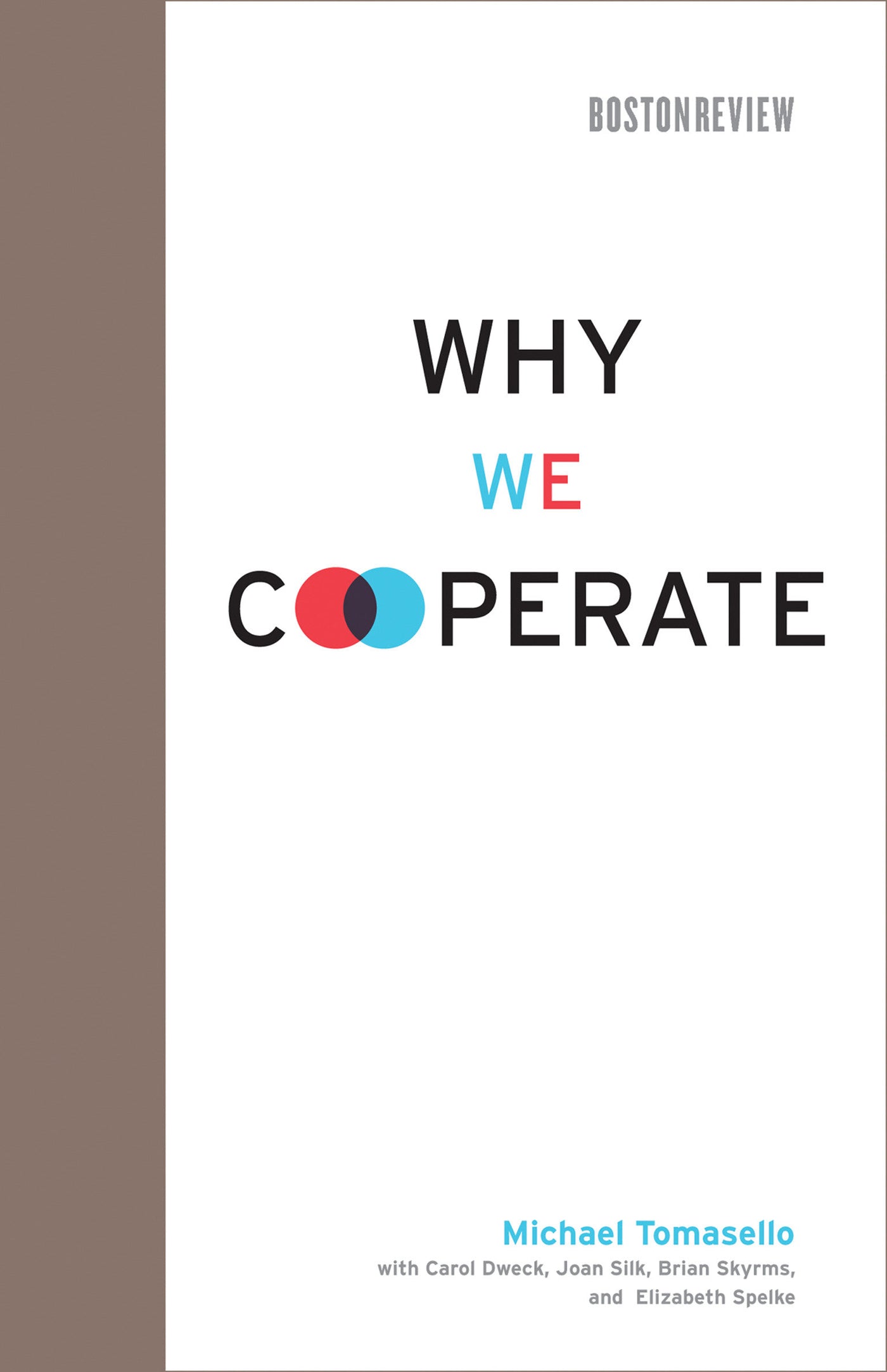
Understanding cooperation as a distinctly human combination of innate and learned behavior.
Drop something in front of a two-year-old, and she’s likely to pick it up for you. This is not a learned behavior, psychologist Michael Tomasello argues. Through observations of young children in experiments he himself has designed, Tomasello shows that children are naturally—and uniquely—cooperative. Put through similar experiments, for example, apes demonstrate the ability to work together and share, but choose not to. As children grow, their almost reflexive desire to help—without expectation of reward—becomes shaped by culture. They become more aware of being a member of a group. Groups convey mutual expectations, and thus may either encourage or discourage altruism and collaboration. Either way, cooperation emerges as a distinctly human combination of innate and learned behavior.
In Why We Cooperate, Tomasello’s studies of young children and great apes help identify the underlying psychological processes that very likely supported humans’ earliest forms of complex collaboration and, ultimately, our unique forms of cultural organization, from the evolution of tolerance and trust to the creation of such group-level structures as cultural norms and institutions.
Scholars Carol S. Dweck, Joan B. Silk, Brian Skyrms, and Elizabeth S. Spelke respond to Tomasello’s findings and explore the implications.