

描述
A challenge to the hegemony of perspective: investigations into other forms of representation used by different cultures over the last two thousand years.
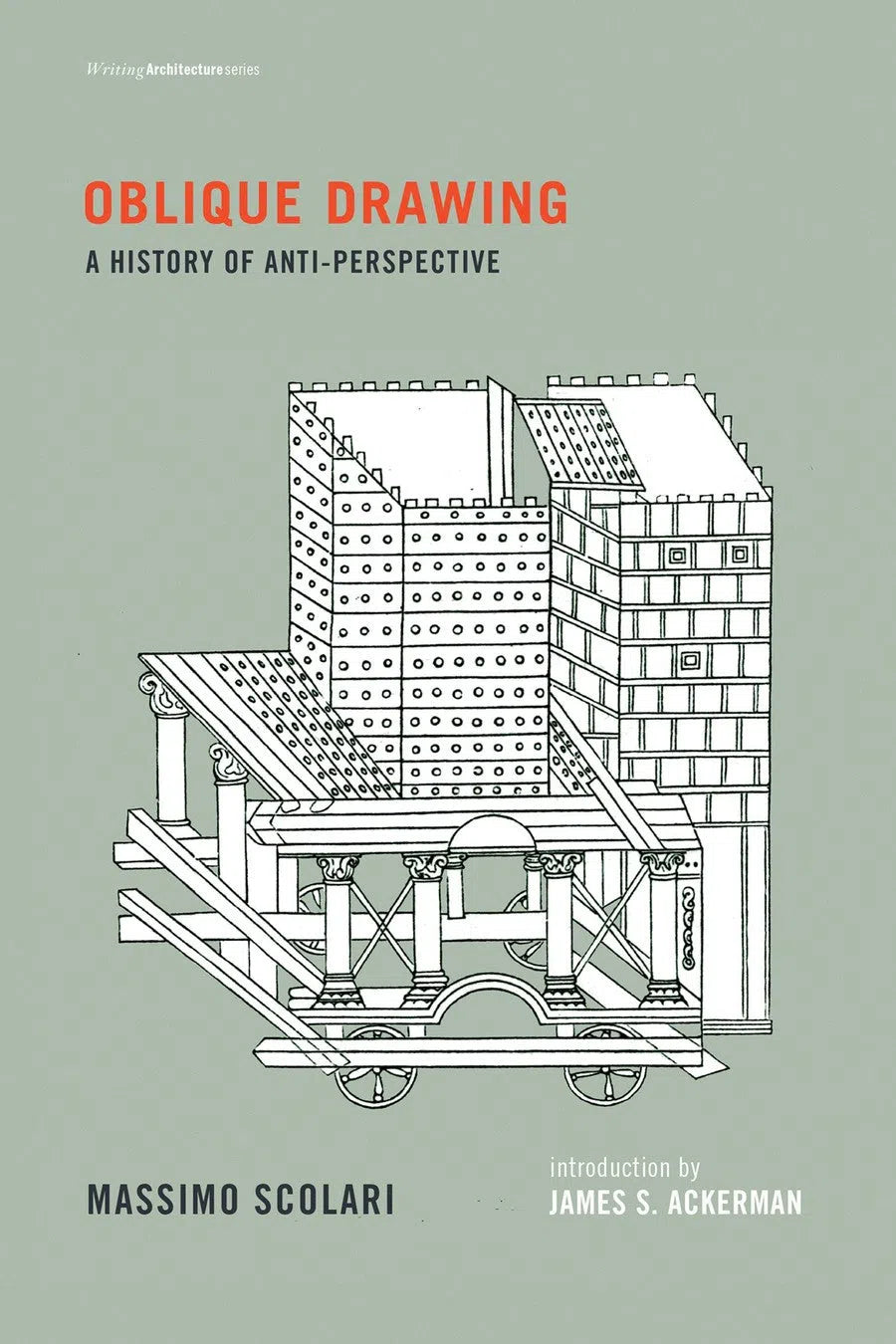
For more than half a century, Erwin Panofsky's Perspective as Symbolic Form has dominated studies of visual representation. Despite the hegemony of central projection, or perspective, other equally important methods of representation have much to tell us. Parallel projection can be found on classical Greek vases, in Pompeiian frescoes, in Byzantine mosaics; it returned in works of the historical avant-garde, and remains the dominant form of representation in China. In Oblique Drawing, Massimo Scolari investigates “anti-perspective” visual representation over two thousand years, finding in the course of his investigation that visual and conceptual representations are manifestations of the ideological and philosophical orientations of different cultures. Images prove to be not just a form of art but a form of thought, a projection of a way of life.
Scolari's generously illustrated studies show that illusionistic perspective is not the only, or even the best, representation of objects in history; parallel projection, for example, preserves in scale the actual measurements of objects it represents, avoiding the distortions of one-point perspective. Scolari analyzes the use of nonperspectival representations in pre-Renaissance images of machines and military hardware, architectural models and drawings, and illustrations of geometrical solids. He challenges Panofsky's theory of Pompeiian perspective and explains the difficulties encountered by the Chinese when they viewed Jesuit missionaries' perspectival religious images.
Scolari vividly demonstrates the diversity of representational forms devised through the centuries, and shows how each one reveals something that is lacking in the others.