
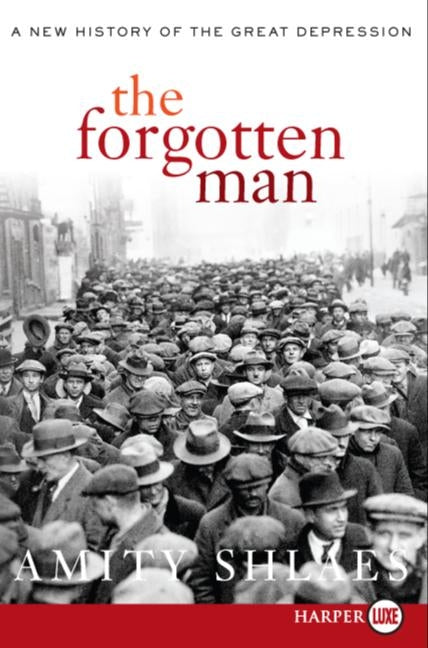

Description
By: Amity Shlaes
The Great Depression was one of the most difficult periods in American History. Conventional interpretation holds that Roosevelt’s New Deal array of government programs, along with the onset of World War II, helped to save the country. However, Amity Shlaes challenges this interpretation in The Forgotten Man.
Shlaes argues that as heroic as FDR was, his economic planning often made things worse, and probably made the Depression last even longer. The end of the Depression was brought about more by the economy’s natural tendency to correct itself, along with the character and driving spirit of the American people. Featuring expert economic analysis and firsthand accounts of life during the Depression, The Forgotten Man is a much needed reevaluation of a decade that engendered social, economic and political changes that still affect us today. Amity Shlaes is a visiting senior fellow at the Council on Foreign Relations and a syndicated columnist at Bloomberg. She has written for the Financial Times and the Wall Street Journal, where she was an editorial board member, as well as for The New Yorker, Fortune, National Review, The New Republic, and Foreign Affairs. Shlaes is the author of The Greedy Hand. She lives in New York. “Were John Kenneth Galbraith and Milton Friedman to spend a century or two reconciling their positions so as to arrive at a clear view of the Great Depression, this would be it.” — Mark Helprin