
Description
“Jenkins is one of
—Forbes magazine
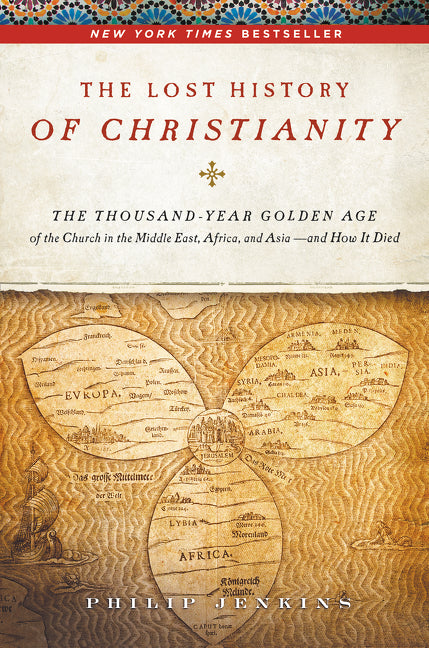
The Lost History of Christianity by Philip Jenkins offers a revolutionary view of the history of the Christian church. Subtitled “The Thousand-Year Golden Age of the Church in the Middle East, Africa, and Asia—and How It Died,” it explores the extinction of the earliest, most influential Christian churches of China, India, and the Middle East, which held the closest historical links to Jesus and were the dominant expression of Christianity throughout its first millennium. The remarkable true story of the demise of the institution that shaped both
In this groundbreaking work, acclaimed scholar Philip Jenkins tells a little-known, but true story. For centuries, the heart of Christianity was actually in the Middle East, Asia, and Africa, with significant communities extending as far afield as China. These churches and their leaders dominated the Middle East for centuries and became the chief administrators and academics in the new Muslim Empire.
Once extremely powerful, The Lost History of Christianity reveals the shocking truth about how these churches died. However, their influence was strong enough to last for another thousand years after their supposed demise. Philip Jenkins obtained his Doctorate in History from Cambridge University. Since 1980, he has taught at Penn State University, and currently holds the rank of Edwin Erle Sparks Professor of the Humanities in History and Religious Studies. His book The Next Christendom was named one of the top religion books of 2002 by USA Today. His articles have appeared in many newspapers and magazines, including the Wall Street Journal, the Washington Post, and the Boston Globe. Jenkins’s radio appearances include NPR’s “All Things Considered,” and “Fresh Air” with Terri Gross. “The Lost History of Christianity is a fascinating study of the first thousand-plus years of the Church--a Church rooted in the Middle East, Africa, and Asia. We have much to learn from the tale of its reach, its particular way of being Christian, and its eventual decomposition.” - Beliefnet.com (One of the Best Religious Books of 2008)You may also like
Top Trending
