
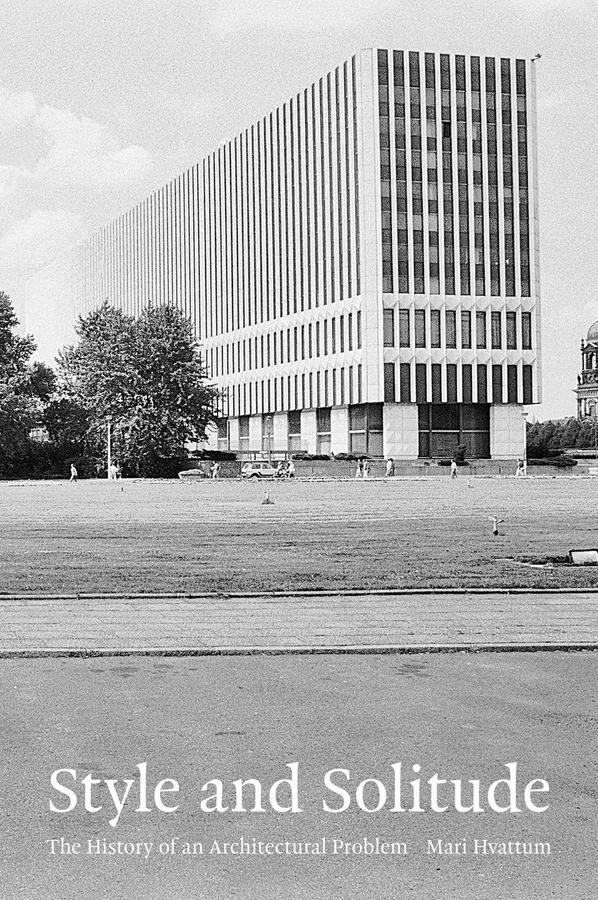

Description
By: Mari Hvattum
How modern notions of architectural style were born—and the debates they sparked in nineteenth-century Germany.
The term style has fallen spectacularly out of fashion in architectural circles. Once a conceptual key to understanding architecture’s inner workings, today style seems to be associated with superficiality, formalism, and obsolete periodization. But how did style—once defined by German sociologist Georg Simmel as a place where one is “no longer alone”—in architecture actually work? How was it used and what did it mean? In Style and Solitude, Mari Hvattum seeks to understand the apparent death of style, returning to its birthplace in the late eighteenth century, and charting how it grew to influence modern architectural discourse and practice.
As Hvattum explains, German thinkers of the eighteenth and nineteenth century offered competing ideas of what style was and how it should be applied in architecture. From Karl Friedrich Schinkel’s thoughtful eclecticism to King Maximilian II’s attempt to capture the zeitgeist in an architectural competition, style was at the center of fascinating experiments and furious disputes. Starting with Johann Joachim Winckelmann’s invention of the period style and ending a century later with Gottfried Semper’s generative theory of style, Hvattum explores critical debates that are still ongoing today.
How modern notions of architectural style were born—and the debates they sparked in nineteenth-century Germany.
The term style has fallen spectacularly out of fashion in architectural circles. Once a conceptual key to understanding architecture’s inner workings, today style seems to be associated with superficiality, formalism, and obsolete periodization. But how did style—once defined by German sociologist Georg Simmel as a place where one is “no longer alone”—in architecture actually work? How was it used and what did it mean? In Style and Solitude, Mari Hvattum seeks to understand the apparent death of style, returning to its birthplace in the late eighteenth century, and charting how it grew to influence modern architectural discourse and practice.
As Hvattum explains, German thinkers of the eighteenth and nineteenth century offered competing ideas of what style was and how it should be applied in architecture. From Karl Friedrich Schinkel’s thoughtful eclecticism to King Maximilian II’s attempt to capture the zeitgeist in an architectural competition, style was at the center of fascinating experiments and furious disputes. Starting with Johann Joachim Winckelmann’s invention of the period style and ending a century later with Gottfried Semper’s generative theory of style, Hvattum explores critical debates that are still ongoing today.