
Description
By: Jean-Michel Rabate
Pinocchio knows: the unconscious knowledge of the conscious lie.
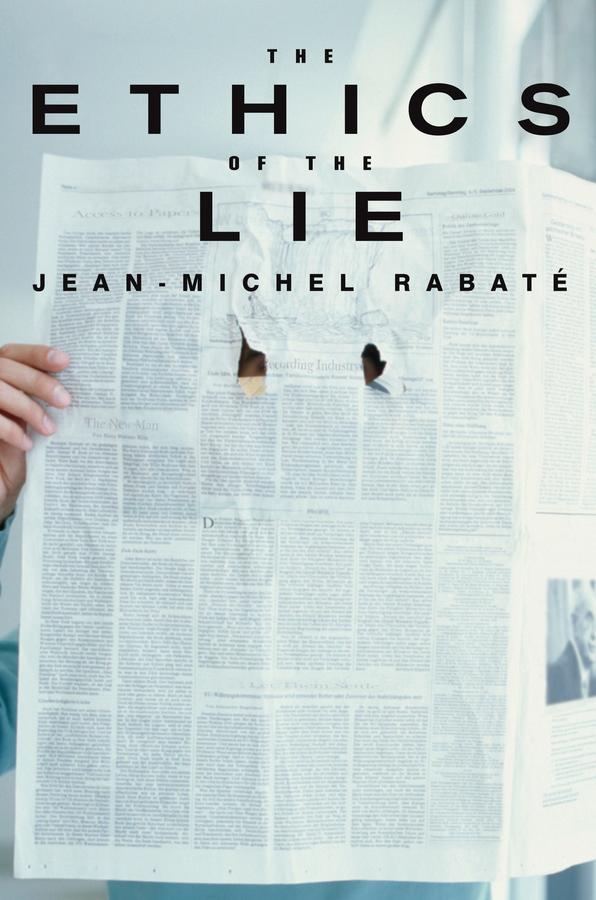
From little white lies to the deepest, darkest ones, it is an accepted fact that we–like the boy who cried wolf–lie very often, at least three times a day. The thesis of this erudite and entertaining book is that lies are structured like paradoxes. Lying is a common social manifestation that is fraught with contradictions: we lie quite frequently, but we hate liars, and we detest above all being lied to. We know that most politicians lie, hoping that they lie reasonably, as it were, but when they are caught in the act, their careers are ruined. The common root to these phenomena goes back to the paradigmatic figure of the paradox: I am lying but I tell the truth when I say that I am lying.
In The Ethics of the Lie, Jean-Michel Rabate examines this ancient problem in a new light, starting with a contemporary American context. He enters into the web of lies spun by the media, turns the microscope on the U.S. presidency, explores the dynamics of family lies, and even analyzes Hollywood’s role in reenacting these dilemmas. Do we live in an age when disinformation has reached such a fevered pitch that we can dismiss everything presented as "fact" or "news"? In questioning this widespread skepticism, Rabate deconstructs the pathology of lies and their logical mechanisms, leading us back to the continuing debates of the great philosophers and their philosophical foundations–Plato, Nietzsche, and Aristotle–and in doing so, swears to tell the truth, the whole truth, and nothing but the truth.
Pinocchio knows: the unconscious knowledge of the conscious lie.
From little white lies to the deepest, darkest ones, it is an accepted fact that we–like the boy who cried wolf–lie very often, at least three times a day. The thesis of this erudite and entertaining book is that lies are structured like paradoxes. Lying is a common social manifestation that is fraught with contradictions: we lie quite frequently, but we hate liars, and we detest above all being lied to. We know that most politicians lie, hoping that they lie reasonably, as it were, but when they are caught in the act, their careers are ruined. The common root to these phenomena goes back to the paradigmatic figure of the paradox: I am lying but I tell the truth when I say that I am lying.
In The Ethics of the Lie, Jean-Michel Rabate examines this ancient problem in a new light, starting with a contemporary American context. He enters into the web of lies spun by the media, turns the microscope on the U.S. presidency, explores the dynamics of family lies, and even analyzes Hollywood’s role in reenacting these dilemmas. Do we live in an age when disinformation has reached such a fevered pitch that we can dismiss everything presented as "fact" or "news"? In questioning this widespread skepticism, Rabate deconstructs the pathology of lies and their logical mechanisms, leading us back to the continuing debates of the great philosophers and their philosophical foundations–Plato, Nietzsche, and Aristotle–and in doing so, swears to tell the truth, the whole truth, and nothing but the truth.